



|
In the heart of Turkey's Aegean region, the modern town of Selçuk cradles one of the most magnificent archaeological treasures of the ancient world. Ephesus—or Efes, as it's known in
Turkish—was once the second-largest city of the Roman Empire, a bustling metropolis of over 250,000 people that rivaled Rome itself. Today, its remarkably preserved ruins offer
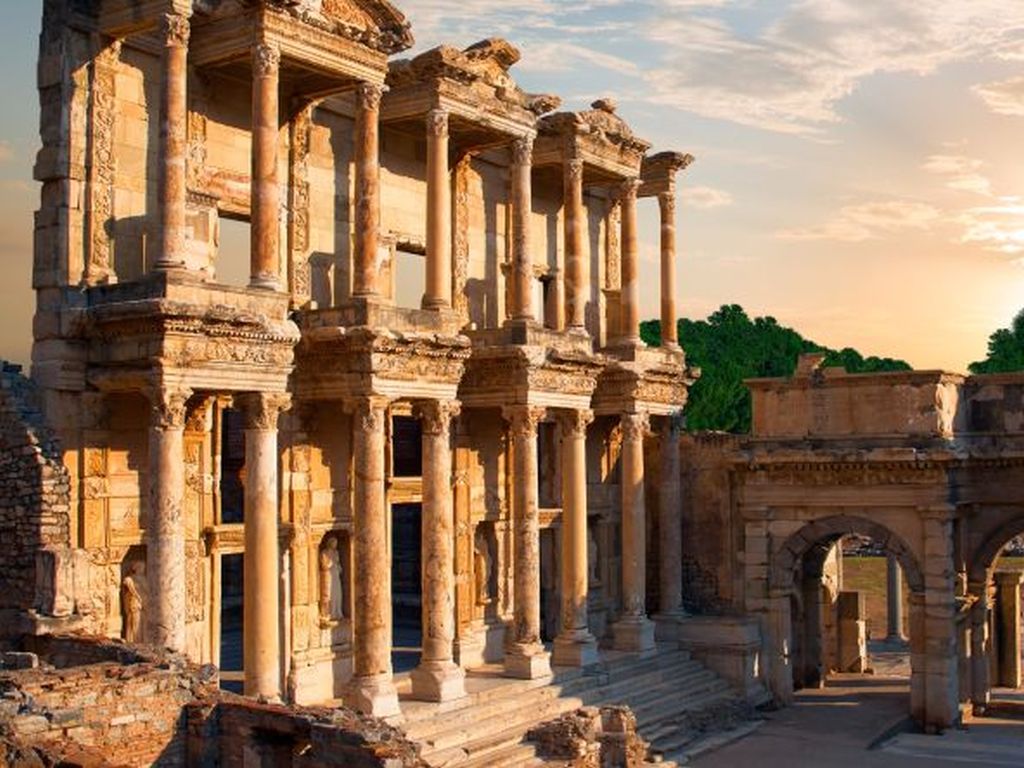
visitors an unparalleled journey through time, while the charming town of Selçuk serves as the perfect gateway to explore this ancient wonderland. A City Forged by History The story of Ephesus stretches back over three millennia. According to legend, the city was founded around the 10th century BC by Androklos, an Athenian prince who followed a prophecy from the Oracle of Delphi. The city's fortunes rose and fell with empires: it prospered under the Lydian king Croesus, who helped rebuild the Temple of Artemis, fell to the Persians, was liberated by Alexander the Great, and eventually became a jewel in the crown of the Roman Republic. During the Roman period, Ephesus reached its zenith. It was a center of learning, home to the philosopher Heraclitus, and a city where women enjoyed remarkable rights and equality—a rarity in the ancient world. The streets were lit at night by oil lamps, and the city boasted an advanced urban infrastructure that continues to impress visitors today. Walking Among Giants: Highlights of Ephesus Exploring Ephesus is like stepping into a living museum. The site stretches across a hillside, revealing layer upon layer of history with every turn. The Library of Celsus The most iconic sight at Ephesus is undoubtedly the Library of Celsus. Built between AD 110 and 135, this magnificent structure once held thousands of scrolls and stood three stories high. Though destroyed by an earthquake in the 10th century, its spectacular facade has been meticulously reconstructed, allowing visitors to appreciate the grandeur of Roman architecture. The library's design is a testament to Roman engineering and aesthetic sensibilities, making it one of the most photographed ruins in the Mediterranean. The Great Theatre Perched on the slopes of Mount Pion, the Great Theatre could seat an astonishing 25,000 spectators. It's here that the Apostle Paul is said to have preached to the Ephesians—and according to tradition, was famously "booed" by the crowd. The theatre's acoustics remain so excellent that even today, a whisper from the stage can be heard clearly in the top rows. The Temple of Artemis One of the Seven Wonders of the Ancient World once stood at Ephesus: the colossal Temple of Artemis. Completed around 550 BC, it was four times larger than the Parthenon in Athens. However, little remains today beyond a single, lonely column standing in a marshy field near the main archaeological site. Yet even this solitary pillar evokes the magnitude of what once was—a sacred place of worship that drew pilgrims from across the ancient world. Beyond the Marble Streets Walking along Curetes Street, with its marble paving stones worn smooth by centuries of footsteps, visitors pass the Temple of Hadrian with its intricate reliefs, the well-preserved public toilets that hint at Roman urban planning, and the Terrace Houses—elaborate homes of the wealthy, complete with underfloor heating and beautiful frescoes. For those seeking a quieter experience, a visit to the Cave of the Seven Sleepers offers a peaceful respite and a glimpse into early Christian legend. Selçuk: The Living History Book Just three kilometers from Ephesus, the town of Selçuk is far more than a convenient base—it is a destination rich with history in its own right. Dominating the skyline is Ayasuluk Castle, originally built by the Byzantines in the 6th century and later expanded by the Seljuks and Ottomans. Nearby lies the Basilica of St. John, built by the Emperor Justinian I over the believed burial site of the apostle John. The 14th-century İsabey Mosque stands as a beautiful example of Seljuk architecture, with its construction incorporating stones salvaged from the ruins of Ephesus. The town itself offers a slower, more authentic Turkish experience. Tree-lined avenues and orange groves create a pleasant atmosphere, and local eateries serve traditional dishes like gözleme (Turkish pancakes) and testi kebab (clay pot lamb). The Selçuk Museum houses many artifacts excavated from Ephesus, providing context and depth to the ruins you've explored. Planning Your Visit: Tips for Travelers The best time to explore Ephesus and Selçuk is during spring (April–May) or autumn (September–October), when temperatures are mild and crowds are manageable. Summer can be intensely hot, so early morning or late afternoon visits are advisable—and they offer the added bonus of beautiful light for photography. Comfortable walking shoes are essential, as the site's marble paths are uneven and extensive. Bring water, sunscreen, and a hat, as shade is scarce among the ruins. The site is easily accessible from Selçuk by taxi or minibus, and Izmir's Adnan Menderes Airport is about an hour away by train or car. Whether you're a history enthusiast, a spiritual pilgrim tracing the footsteps of early Christians, or simply a traveler seeking wonder, Ephesus and Selçuk offer an unforgettable experience. As you walk the same marble streets that emperors, philosophers, and ordinary citizens once trod, you'll feel the heartbeat of an ancient world that still pulses through the Aegean landscape. |
